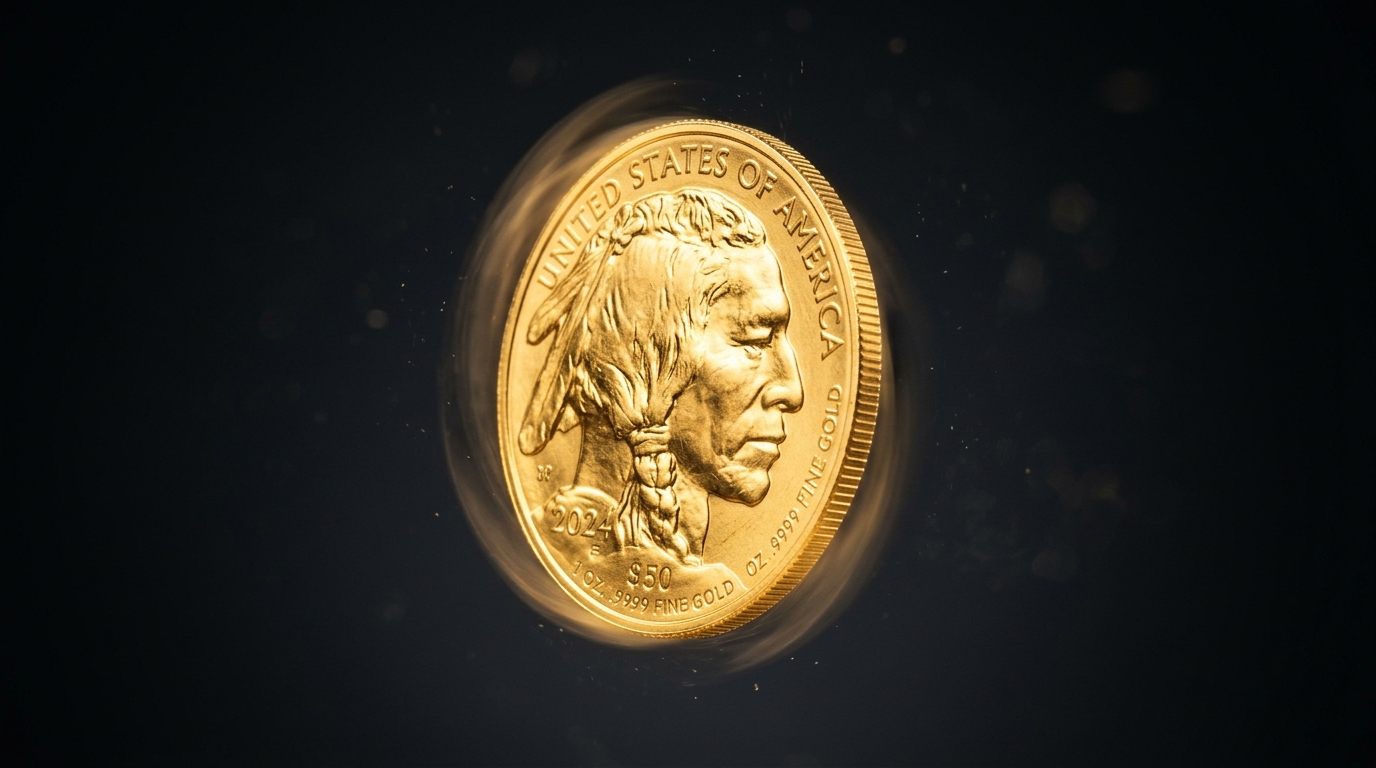
When two friends cannot agree on what movie to watch, or when captains walk out onto the cricket pitch or football field before a championship match, someone usually reaches into their pocket to toss a coin.
We all grow up believing one fundamental rule:
A coin toss is always a pure, indisputable 50/50 choice.
Need to make a fast decision? Pick heads or tails and let the coin decide!
But is flipping a physical coin truly 50/50 in real life? Scientists, mathematicians, and physics researchers have spent years testing thousands of coin tosses with ultra-high-speed cameras and robotic launchers.
What they found might shock you! Here is the honest truth about the physics of coin flips explained in simple, friendly English—along with how an online coin flip generator solves every physical flaw.
1. The Famous Stanford Study: The 51% Rule
In 2007, a renowned Stanford University statistics professor named Persi Diaconis led an in-depth study investigating physical coin tosses.
Using high-speed slow-motion cameras and mechanical coin launchers, his team discovered something surprising:
- When you flip a coin with your thumb, it does not rotate on a single perfect flat axis like a spinning wheel.
- It precesses and wobbles erratically as it tumbles through the air.
Because of this natural physical wobble, whichever side is facing up on your thumb before the toss spends slightly more time facing up while flying.
The Proven Physical Numbers
- When caught in the hand mid-air, a coin lands on the same side it started on about 50.8% of the time (almost 51%).
- The opposite side lands only about 49.2% of the time.
Start with HEADS up on your thumb ──> About 51% chance to land on HEADS
Start with TAILS up on your thumb ──> About 51% chance to land on TAILS
For casual day-to-day decisions, a 1% bias seems negligible. But in high-stakes professional sports, esports tiebreakers, or repeated betting, starting with your chosen side face up gives you a measurable statistical edge!
2. Why Spinning a Coin on a Table Is NOT Fair
If you want a fair coin toss online or in person, never spin a coin on a table like a top.
When a coin spins on its rim, microscopic weight distribution and gravitational center take over:
- Every coin in the world has unique metal stampings: portraits, monarchs, emblems, or national monuments.
- One side has more metal stamped onto it, making it microscopically heavier.
- For example, tests with the US Lincoln Penny revealed that spinning pennies land Tails up nearly 80% of the time because Lincoln’s heavy bust on the front weighs that side down!
If you spin a physical coin on a smooth desk, you are not getting an honest 50/50 toss—you are getting a heavily biased physical demonstration.
3. The Gambler’s Fallacy: Streaks and Luck
Imagine you use a coin flip simulator or toss a physical coin 5 times in a row, and every single time it lands on Heads:
$$\text{Heads} \to \text{Heads} \to \text{Heads} \to \text{Heads} \to \text{Heads}$$
What do you think will happen on the 6th flip?
Almost everyone instinctively feels:
“Tails has to come next! It’s due! The universe will balance it out!”
Psychologists call this the Gambler’s Fallacy.
The Mathematical Truth
Coins have no memory, no brain, and no emotions. A coin cannot remember that it landed on Heads five seconds ago.
On the 6th flip, the chance of getting Tails is still exactly 50.00%. Every single toss is a completely independent, fresh event with zero connection to the past.
4. Why Use an Online Coin Flip Simulator?
Today, many people rarely carry physical metal pocket change. Whether you are using your phone, tablet, or laptop, a modern 3D virtual coin flipper provides significant advantages:
- Hardware-Entropy Fairness: Tools like PickLab’s 3D coin flip generator harvest real physical CPU electronic fluctuations from your device (
crypto.getRandomValues). That means zero thumb wobble, zero table bias, and a true 50.00% mathematical probability. - Instant Multiple Coin Tosses: Need to flip 2, 3, or 5 coins simultaneously to decide who buys coffee or settle board game dice rolls? PickLab lets you toss multiple coins with one tap.
- Dedicated International Coins (Flip an Indian Coin): From US Quarters to European Euros and the classic Indian 1 Rupee coin (famous for cricket match tosses in the IPL and gully cricket), you can choose authentic 3D coins with realistic clinking sounds.
- Streak & Statistic Tracking: Automatically track your heads vs. tails ratios and record your longest winning streaks live.
Frequently Asked Questions (FAQ)
How does an online coin flip generator work?
A virtual coin flip generator uses your browser’s built-in cryptographic security engine (crypto.getRandomValues) to produce an unpredictable binary number (0 for Heads, 1 for Tails). In PickLab, this math is combined with a realistic 3D physics animation and authentic audio effects so you see and hear the coin spin before landing.
Is flipping a coin online truly 50/50?
Yes! Unlike physical coins—which can have edge wear, uneven metal weight, or thumb wobbles—PickLab’s online coin toss generates exactly 50.00% Heads and 50.00% Tails over repeated flips, making it the fairest way to settle decisions.
What is the difference between heads or tails?
“Heads” refers to the obverse side of a coin, which traditionally depicts the head or portrait of a leader, monarch, or national symbol (such as the Lion Capital of Ashoka on an Indian Rupee or George Washington on a US Quarter). “Tails” refers to the reverse side, which usually shows the currency value, denomination, or an emblematic animal or crest.
Can I flip an Indian coin for cricket match tosses?
Yes! On PickLab’s 3D Coin Flipper, you can select the Indian Rupee coin specifically designed for IPL, gully cricket, and regional sports tosses across India. It displays the Ashoka emblem on Heads and the numeral ₹1 on Tails with traditional Hindi and English markings.
How is PickLab 3D Coin Flip better than Google Coin Flip?
While the basic Google coin flip is a simple flat 2D animation with fixed sound, PickLab provides interactive 3D physics, multiple coin tosses at once, streak counters, custom sound effects, keyboard shortcuts (press Space to toss), and zero invasive advertisements.
Can I flip a coin on my mobile phone without installing an app?
Yes! PickLab is a responsive progressive web app that runs directly inside Chrome, Safari, or Firefox on any iPhone or Android phone. Simply tap the coin or button to toss with zero sign-up or app installation.
What should I do if a coin lands on its edge?
In real life, a coin landing on its thin edge happens approximately once in every 10,000 tosses on hard ground (or slightly more often on soft turf or sand). In our 3D simulator, the coin always settles definitively on Heads or Tails to guarantee a fast, clear decision every time!
Ready to settle your decision with an authentic, fair toss?